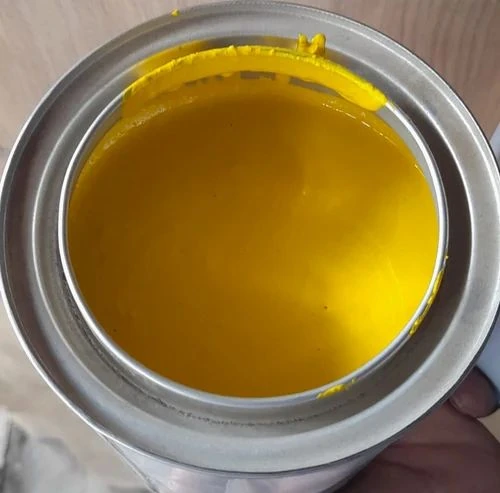
Start with the rubber compound
Identify rubber or TPR, the surface preparation and your print test.
Browse English TDSRubber and TPR product documents
Compare full selection notes & source limitations
Compare the individual handbook entries and download the relevant English sheet. Reported properties retain their test-method and application limitations.
| Product | Process | Selection notes | Document |
|---|---|---|---|
| RP Rubber Solvent-Based Ink | Screen printing | For printing on the rubber grade identified as RP in the handbook. | Download PDF |
| TPR Solvent-Based Ink | Screen printing | For TPR footwear and sports-goods applications. | Download PDF |
| Rubber Surface Treatment Agent | Surface preparation | For pretreating rubber materials. | Download PDF |
| Rubber Anti-Yellowing Surface Treatment Agent | Surface preparation | For cleaning and preparing rubber and rubber-plastic surfaces. | Download PDF |
Confirm the current exact-grade instructions and test conditions before production.
Browse all English technical sheetsApplication guidance, handling & ordering details
Product Series / Model: RP ink
Looking for rubber printing ink for a footwear component? Identify the rubber type, surface finish and the chemicals encountered later in production. If you need screen printing ink for rubber soles, send the actual component and process for review before choosing a grade. RP ink has a stated stain-removal solvent limitation, so the trial should include relevant production exposure as well as the printed appearance.
Product options and suitable applications
| Series / category | Product type | Selection note |
|---|---|---|
| RP ink | Solvent-based rubber printing ink | Source notes a stain-removal solvent limitation. |
| RP / HRP coatings | Separate rubber coating products | Do not transfer coating resistance claims to RP printing ink. |
What matters in a trial
- The treatment table distinguishes SQ-333 and SQ-335 rubber treatment grades and separates light- and dark-material routes. Additional components are specific to the stated process.
- Confirm whether the part is rubber or TPR; the source treats them separately. Describe mould-release contamination or surface preparation already used.
- Include the finished part and downstream cleaning/bonding steps in the trial brief. Test results from one construction should not be assumed for another.
Technical data and documents
Request the current TDS and SDS for the exact model. Published catalogue properties depend on the product category and evaluation conditions; where the source does not establish a unit or complete test method, contact our technical team.
| Information | How to obtain it |
|---|---|
| Viscosity, application settings and conditioning | Contact our technical team for the exact grade. |
| Pretreatment and compatible products | Confirm against your actual substrate and process. |
| Testing information | Provide the required test method and acceptance criteria. |
Prepare your sample request
Include the substrate name and finish, printing or assembly process, current product and the problem you need to solve. A material offcut and a photograph of the finished construction help us distinguish appearance requirements from interface or flex failures.
Frequently asked questions
Is RP resistant to every cleaning solvent?
No. The source specifically records a limitation. Provide the relevant cleaner or exposure requirement to the technical team.
Can HRP coating be substituted for RP ink?
These are different product categories and processes. Request an application-specific evaluation.
What information is needed to assess a rubber ink for oven or heat exposure?
Share the exact rubber type and finish, when printing occurs relative to moulding or vulcanization, the measured part temperature and exposure time, and the required appearance or adhesion test after heating. An oven set-point alone may not describe the part’s exposure. We will review the requirement against the specific product and construction; confirm any proposed candidate on your material before production.
Related material and technical guides
Evaluate it on your own material
Send the material type, surface finish, current process and required test. Our technical team can help identify a trial candidate and the appropriate TDS / SDS.
Samples, mixed orders and delivery to India
Trial samples are free; you pay postage or courier charges. The minimum bulk order is 2 metric tonnes in total, with mixed ink orders supported. Confirm the assortment with our team.
Production normally completes within one week after order placement. Sea freight takes approximately one month to an Indian port, separately from production; customs clearance and inland delivery are not included in that estimate.
Prices depend on your customised ink requirements. Share the material, intended process, colours, quantity and delivery city/PIN code on WhatsApp for a quotation.
Buying for resale? Review distributor supply information. Need technical documents? Request the TDS and SDS for your exact grade.